What Is a MIDI Keyboard? The Ultimate Beginner-to-Professional Guide for Music Production
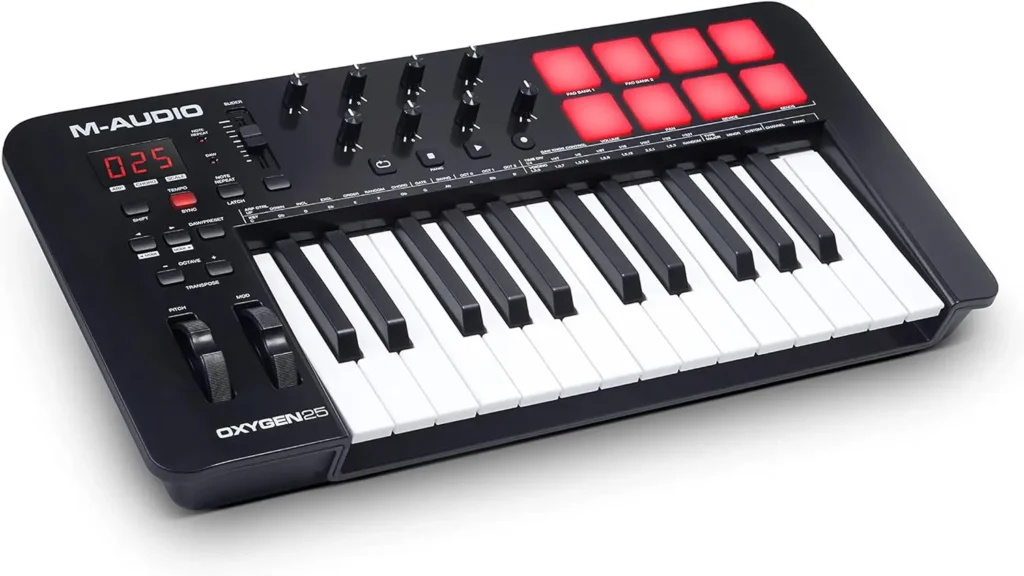
A MIDI keyboard has become one of the most essential tools in modern music production. Whether you are a beginner learning how to make beats, a singer creating melodies, a YouTuber producing background music, or a professional composer working on cinematic soundtracks, a MIDI keyboard can completely transform the way you create music.
In today’s digital music world, producers no longer need expensive recording studios filled with large instruments and hardware equipment. With a MIDI keyboard and music software, you can create professional-quality songs directly from your bedroom or home studio. This is one reason why MIDI keyboards are so popular among music creators around the world.
Unlike a traditional piano or keyboard, a MIDI keyboard usually does not generate sound by itself. Instead, it works as a controller that communicates with software and virtual instruments on your computer or mobile device. When you press a key, the MIDI keyboard sends digital signals that tell the software which note to play and how it should sound.
This technology gives users incredible flexibility because one MIDI keyboard can control thousands of different sounds, including pianos, drums, guitars, violins, synthesizers, bass instruments, orchestral libraries, and electronic effects. Instead of buying multiple physical instruments, producers can access everything digitally.
In this complete guide, you will learn what a MIDI keyboard is, how it works, its features, benefits, uses, types, and how to choose the best MIDI keyboard for your music production setup.
What Is a MIDI Keyboard?
A MIDI keyboard is an electronic musical controller that uses MIDI technology to communicate with computers, music software, and external sound devices. The term MIDI stands for Musical Instrument Digital Interface.
The primary purpose of a MIDI keyboard is to send digital information instead of audio signals. This information includes details such as:
- Which key was pressed
- How hard the key was pressed
- How long the key was held
- Pitch movements
- Modulation effects
- Knob or slider adjustments
When connected to a computer or music workstation, the MIDI keyboard controls virtual instruments inside music production software. For example, pressing a single key can trigger piano notes, electronic synth sounds, orchestral strings, or even realistic drum kits.
One of the biggest advantages of a MIDI keyboard is flexibility. A single device can perform the role of many instruments, making it ideal for producers, composers, and musicians who want unlimited sound options without spending large amounts of money on physical equipment.
Modern MIDI keyboards are available in many sizes and styles. Some are small and portable for travel, while others offer full-sized weighted piano keys for professional performance and advanced music creation.
Understanding MIDI Technology
To fully understand what a MIDI keyboard is, it is important to understand MIDI technology itself. MIDI was introduced in the early 1980s as a universal communication system for electronic musical instruments.
Before MIDI existed, connecting musical devices from different manufacturers was difficult. MIDI solved this problem by creating a standard language that allowed keyboards, synthesizers, computers, and music hardware to communicate with each other.
It is important to know that MIDI does not transmit actual sound. Instead, it sends instructions and performance data. Think of MIDI as a digital language for music. It tells the software:
- What note to play
- When to start the note
- When to stop the note
- How loud the note should be
- What effects should be applied
Because MIDI contains editable information rather than audio recordings, it provides huge advantages during music production. Producers can easily:
- Correct wrong notes
- Change instruments instantly
- Edit melodies after recording
- Adjust song tempo
- Modify timing and rhythm
- Improve performances without re-recording
This is why MIDI technology remains one of the foundations of modern digital music production.
How Does a MIDI Keyboard Work?
A MIDI keyboard works by sending MIDI data to another device such as a computer, smartphone, sound module, or Digital Audio Workstation (DAW). The keyboard itself acts as a controller rather than a standalone musical instrument.
Here is a step-by-step explanation of how the process works:
Step 1: Pressing a Key
When you press a key on the MIDI keyboard, the keyboard detects the note and how strongly you pressed it.
Step 2: Sending MIDI Information
The keyboard converts your action into MIDI data. This data does not contain sound but contains instructions.
Step 3: Receiving Data in Software
The computer or DAW receives the MIDI information through a USB cable or MIDI connection.
Step 4: Triggering a Virtual Instrument
The music software uses a virtual instrument plugin to generate sound based on the MIDI data.
Step 5: Audio Output
The generated sound is played through speakers, headphones, or studio monitors connected to your system.
This process allows musicians to record performances digitally and edit them later with great precision.
Main Features of a MIDI Keyboard
Modern MIDI keyboards include many advanced features that improve creativity, workflow, and music production efficiency. Different models offer different tools depending on whether they are designed for beginners, producers, performers, or professional composers.
Piano-Style Keys
The most important feature of any MIDI keyboard is its piano-style keyboard layout. These keys allow users to play melodies, chords, basslines, and harmonies naturally.
MIDI keyboards are available in different key sizes, including:
- 25 keys
- 32 keys
- 49 keys
- 61 keys
- 88 keys
Smaller keyboards are compact and portable, while larger keyboards provide a more realistic piano-playing experience.
Some professional MIDI keyboards also include weighted or semi-weighted keys that simulate the feel of an acoustic piano.
Velocity-Sensitive Keys
Velocity sensitivity allows the keyboard to detect how hard or softly you press each key.
This feature adds realism and expression to performances because:
- Soft presses create softer sounds
- Hard presses create louder sounds
Without velocity sensitivity, every note would sound the same, making music feel robotic and unnatural.
This feature is extremely important for piano playing, orchestral compositions, and emotional performances.
Drum Pads
Many MIDI controller keyboards include drum pads designed for beat-making and rhythm creation.
These pads are commonly used for:
- Hip-hop production
- EDM beats
- Triggering drum samples
- Finger drumming
- Launching loops and effects
Drum pads are pressure-sensitive and can improve workflow for producers who create modern electronic music.
Knobs and Sliders
Knobs, faders, and sliders provide hands-on control over software settings and effects.
These controls are useful for adjusting:
- Volume levels
- Reverb
- Delay
- Equalization
- Filter settings
- Synth parameters
Using physical controls often feels more natural and efficient than clicking with a mouse.
Pitch Bend and Modulation Wheels
Pitch and modulation wheels are common features found on many MIDI keyboards.
Pitch wheels allow musicians to smoothly bend notes higher or lower, while modulation wheels can add expressive effects like vibrato or motion.
These features are especially useful in:
- Electronic music
- Synth performances
- Film scoring
- Live stage performances
Types of MIDI Keyboards
There are several types of MIDI keyboards available, and each is designed for different musical needs and skill levels.
USB MIDI Keyboards
USB MIDI keyboards are the most common and beginner-friendly option available today.
These keyboards connect directly to computers using a USB cable. Most modern USB MIDI keyboards are plug-and-play, meaning they work instantly without complicated setup processes.
USB MIDI keyboards are ideal for:
- Beginners
- Home studios
- Mobile music production
- Online music learning
They are affordable, lightweight, and compatible with most DAWs and operating systems.
MIDI Controller Keyboards
MIDI controller keyboards are designed specifically for music production and software control.
In addition to piano keys, these devices often include:
- Drum pads
- Sliders
- Knobs
- DAW transport controls
- Performance buttons
These controllers help producers work faster and create music more efficiently.
They are extremely popular among:
- Beat makers
- EDM producers
- Recording artists
- Studio engineers
88-Key Weighted MIDI Keyboards
These keyboards are designed for pianists who want a realistic piano-playing experience.
Features often include:
- Full-sized keys
- Weighted hammer action
- Realistic touch response
They are ideal for:
- Classical piano practice
- Film composers
- Professional musicians
- Advanced studio setups
Although larger and more expensive, they provide excellent realism and control.
Benefits of Using a MIDI Keyboard
MIDI keyboards offer many advantages for musicians, producers, and content creators.
Access to Unlimited Sounds
One of the biggest benefits of a MIDI keyboard is access to thousands of sounds and instruments.
With virtual instrument libraries, users can play:
- Grand pianos
- Electric pianos
- Synthesizers
- Drums
- Violins
- Guitars
- Choirs
- Bass instruments
This versatility makes MIDI keyboards incredibly powerful.
Easy Editing and Flexibility
Because MIDI records note information instead of audio, editing becomes much easier.
Users can:
- Fix mistakes instantly
- Change instruments later
- Adjust timing
- Quantize performances
- Edit melodies after recording
This flexibility saves time and improves productivity.
Space Saving and Portability
A MIDI keyboard takes up much less space than owning multiple physical instruments.
Small MIDI keyboards are especially useful for:
- Bedroom studios
- Traveling musicians
- Small desks
- Mobile setups
Many producers can create full songs using only a laptop and MIDI controller.
Affordable Music Production
Buying real instruments can be expensive, but MIDI keyboards offer a cost-effective solution.
Instead of purchasing:
- A piano
- A synthesizer
- A drum machine
- String instruments
You can access all these sounds digitally using one MIDI keyboard.
Best Uses of a MIDI Keyboard
MIDI keyboards are used in many areas of music and digital content creation.
Music Production
Music producers use MIDI keyboards to create:
- Beats
- Chord progressions
- Basslines
- Melodies
- Synth sounds
- Electronic music tracks
They are one of the most important tools in modern music studios.
Songwriting
Songwriters use MIDI keyboards to quickly test musical ideas and record melodies.
This makes the songwriting process faster and more creative.
Live Performances
Many artists use MIDI keyboards during concerts to control virtual instruments and effects in real time.
This allows performers to access many sounds during live shows.
Film and Video Game Scoring
Composers use MIDI keyboards to create orchestral soundtracks for:
- Movies
- TV dramas
- Video games
- YouTube videos
- Advertisements
Professional orchestral libraries are often controlled entirely through MIDI keyboards.
Music Learning and Education
Students and beginners use MIDI keyboards with learning apps and educational software.
This makes learning piano and music theory more interactive and affordable.
MIDI Keyboard vs Digital Piano
Many beginners confuse MIDI keyboards with digital pianos, but they are designed for different purposes.
A digital piano is mainly built for piano practice and traditional playing. It includes built-in sounds and speakers.
A MIDI keyboard is mainly designed for controlling software and creating digital music.
MIDI Keyboard Advantages
- Better for music production
- More portable
- Affordable
- Flexible sound options
- DAW integration
Digital Piano Advantages
- Built-in speakers
- Realistic piano feel
- Better for traditional practice
- Standalone performance capability
Choosing between the two depends on your musical goals.
What Do You Need to Use a MIDI Keyboard?
To use a MIDI keyboard effectively, you typically need additional equipment and software.
A Computer or Mobile Device
Most MIDI keyboards connect to:
- Windows computers
- Mac computers
- Tablets
- Smartphones
Modern mobile apps also support MIDI music production.
DAW Software
A DAW (Digital Audio Workstation) is software used for recording, editing, and producing music.
Popular DAWs include:
- Ableton Live
- FL Studio
- Logic Pro
- Cubase
- Studio One
- Reaper
These programs allow you to record MIDI performances and produce complete songs.
Virtual Instruments and Plugins
Virtual instruments generate the sounds controlled by the MIDI keyboard.
Examples include:
- Piano plugins
- Drum libraries
- Synthesizers
- Orchestra libraries
- Guitar simulators
These plugins greatly expand creative possibilities.
How to Choose the Best MIDI Keyboard
Choosing the best MIDI keyboard depends on your experience level, budget, and production goals.
For Beginners
Beginners should look for:
- Easy setup
- USB connectivity
- Affordable pricing
- Basic controls
- 25 or 49 keys
Simple MIDI keyboards are easier to learn and more budget-friendly.
For Producers and Beat Makers
Producers often prefer keyboards with:
- Drum pads
- Knobs and sliders
- DAW controls
- Velocity-sensitive keys
These features improve workflow and beat production.
For Professional Pianists
Pianists usually prefer:
- 88 weighted keys
- Realistic piano action
- High-quality build materials
This provides a natural playing experience similar to an acoustic piano.
Popular MIDI Keyboard Brands
Several brands are known for producing reliable and high-quality MIDI keyboards.
Popular brands include:
- Akai Professional
- Novation
- Arturia
- Native Instruments
- M-Audio
- Alesis
Each company offers different models for beginners and professionals.
Common Problems With MIDI Keyboards
Although MIDI keyboards are highly useful, users may occasionally experience technical issues.
Latency Problems
Latency is the delay between pressing a key and hearing sound.
This can usually be fixed by:
- Using ASIO drivers
- Lowering audio buffer size
- Using an audio interface
Driver and Compatibility Issues
Some keyboards may require software drivers or firmware updates.
Always check compatibility with your operating system and DAW before buying.
Limited Key Range
Small MIDI keyboards are portable but may feel restrictive for advanced piano performances.
Larger keyboards offer greater flexibility for complex compositions.
The Future of MIDI Keyboards
MIDI technology continues to evolve rapidly as music production becomes more digital.
Future MIDI keyboards may include:
- Wireless connectivity
- AI-powered production tools
- Advanced touch sensitivity
- Smart chord generation
- Cloud integration
- Better mobile compatibility
These innovations will make music production even more accessible for creators worldwide.
Final Thoughts
A MIDI keyboard is one of the most valuable tools for modern music production, songwriting, beat-making, and digital performance. It allows musicians to control virtual instruments, create professional-quality tracks, and access unlimited creative possibilities from a single device.
Whether you are a beginner starting your first music project or a professional producer building complex arrangements, a MIDI keyboard can improve creativity, workflow, and production quality significantly.
By understanding how MIDI keyboards work and selecting the right model for your needs, you can build an efficient music production setup and unlock endless opportunities in the world of digital music.